
How I’m evolving as a professional writer without losing my mind.
…or any other expendables.

I don’t often delve into the intricacies of writing in my newsletter, but I’ve had a few minor epiphanies about my habits and hang-ups in the first half of this year that have put me in a thoughtful mood. And as I’m about halfway through drafting this current work in progress, I figured now would be a good time to share them with you, dear reader, in the hopes of your possible enlightenment.

Listen, I say stay true to who you are. And who I am is a plotter. I do not use this word lightly. I don’t mean that I use a plot diagram, fill in the blanks, and then let whimsy lead the way. No, my friends. No. I am a plotter. The most plottery plotter you ever did meet.
Any time that I’m about to step over that precipice into a new project, I do two things: open a Word doc, title it THE HUB, and begin brain dumping everything I know about this idea, then I crack open a fresh composition notebook where I can flee to whenever my brain feels tied in a knot. In THE HUB, I figure out who the characters are, where it’s set, what their internal and external goals, motivations, and conflicts are, scenes that begin to form the more that I write, songs that I’ll eventually add to a playlist so that I can listen and daydream while I’m driving mundane places or walking the dog.
The next thing I do is create a Pinterest board. I pin everything that makes me feel inspired about this project. Usually, I pick an actor and actress to physically represent my main characters. While I don’t typically reuse the same actors and actresses for different projects, sometimes I do. I pin outfits they would wear, places that they visit. Every place I imagine in one of my books, even if it’s a fictitious locale, is rooted in a real place. The Old Sea Ghost in The Edge of Summer? It’s The Red Inn in Provincetown, MA. The house Benjamin Churchill starts to renovate in Words Composed of Sea and Sky? A real house I pass almost every day when I’m on the Cape. Fun fact, it’s also Uncle Jack’s house. (Anyone pick up on that Easter egg? Anyone?) Mistlethrush Hall in Witty in Pink is based on Barnsley House in the Cotswolds, and Wrexford Park is based on Belton House. When I’m stuck on something, I can click on my Pinterest board and immerse myself in that world again.
Then it’s time for the beat sheet. I found the book Romancing the Beat by Gwen Hayes to be particularly helpful, and I created a worksheet for myself based on her work (incase you were wondering if there were any clues to my having been a teacher for the past fifteen years of my life, this would be it–I have a worksheet for everything). I linger over this worksheet for a while because, oftentimes, the beginning of my story is exceptionally clear, and then the deeper I delve, the less I know about how it all comes together. I have to let it simmer for a while.
Once I have a general idea of how this story is going to play out, it’s time to move on to writing the synopsis. I try to keep my synopses between two and three pages, and while it’s a chore to write, I’m usually happy with how they turn out.
And then it’s time for the outline. My chapter by chapter outline. I love this outline. It’s my life raft in the tumultuous sea of drafting. While each chapter generally gets about half a page, I rarely include dialogue (unless an exchange really hits me and I have to write it down). My outline is always bulleted, single-spaced, coming in at around 10k words and 20 pages. Upon completion, I print it out and carry it around with my laptop. I scribble all over it, add ideas, cross things off. It’s a living, breathing document. If I take the time to write this outline, it means I’m serious about this story idea. It will be written.
In my current work in progress (WIP), I made the mistake of going against my natural plotting instincts. I decided that I didn’t need that detailed of an outline. Why was I wasting so much time on this stage when I could cut corners and jump right into the drafting? Oh, my sweet summer child. Was I ever wrong. I decided to just write a brief 2-3 sentence synopsis of each chapter instead, leading me to have about an eight page outline, and then I took to drafting. And quickly stalled at the 25k word mark. This wasn’t enough. I hadn’t fleshed out the story enough. I realized that by writing my intricately detailed outline, I got to know my characters so much better than if I skipped it. I couldn’t draft their story if I didn’t even really know it. So I paused in the middle of drafting and did what I should have done in the first place: write that outline. Could I have saved myself the angst by just writing this in the first place? Sure could have. But I didn’t, so I had to, and now it’s done!
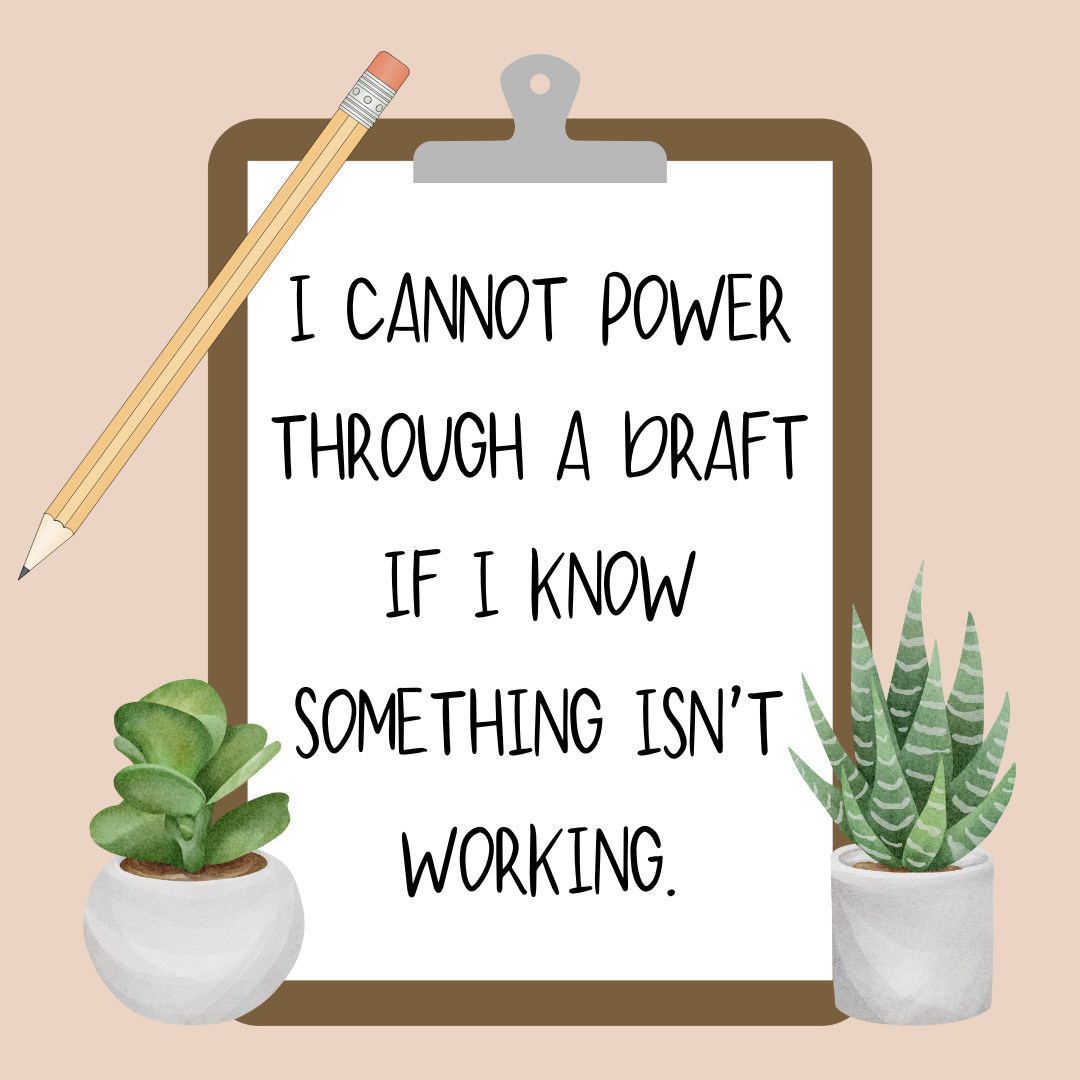
Which leads me to my next revelation: I cannot power through a draft if there’s something that’s not working. I feel like all over the internet, writers are told that we’re allowed to write that shitty first draft, and generally speaking, I agree with that. My first drafts are absolutely atrocious compared to what actually gets published, and I believe that’s true for all authors. But the one thing I cannot do is continue drafting when something has happened in the beginning of the novel that I know does not work. I can’t just let it sit there and wait until revisions to take it out. It has to go. Chapters have to move around. Characters need to change, leave, appear, whatever.
Sometimes this requires me to go back to my outline and fix the problem there first, then jump back into my draft (I’m currently neck-deep in this process in my current WIP). Then I can get back to drafting. It feels a little like losing momentum, but once the change has been made, I’m ready to move forward again. If I want my book to resonate, then I need to put the time and effort in, even when it feels tedious.
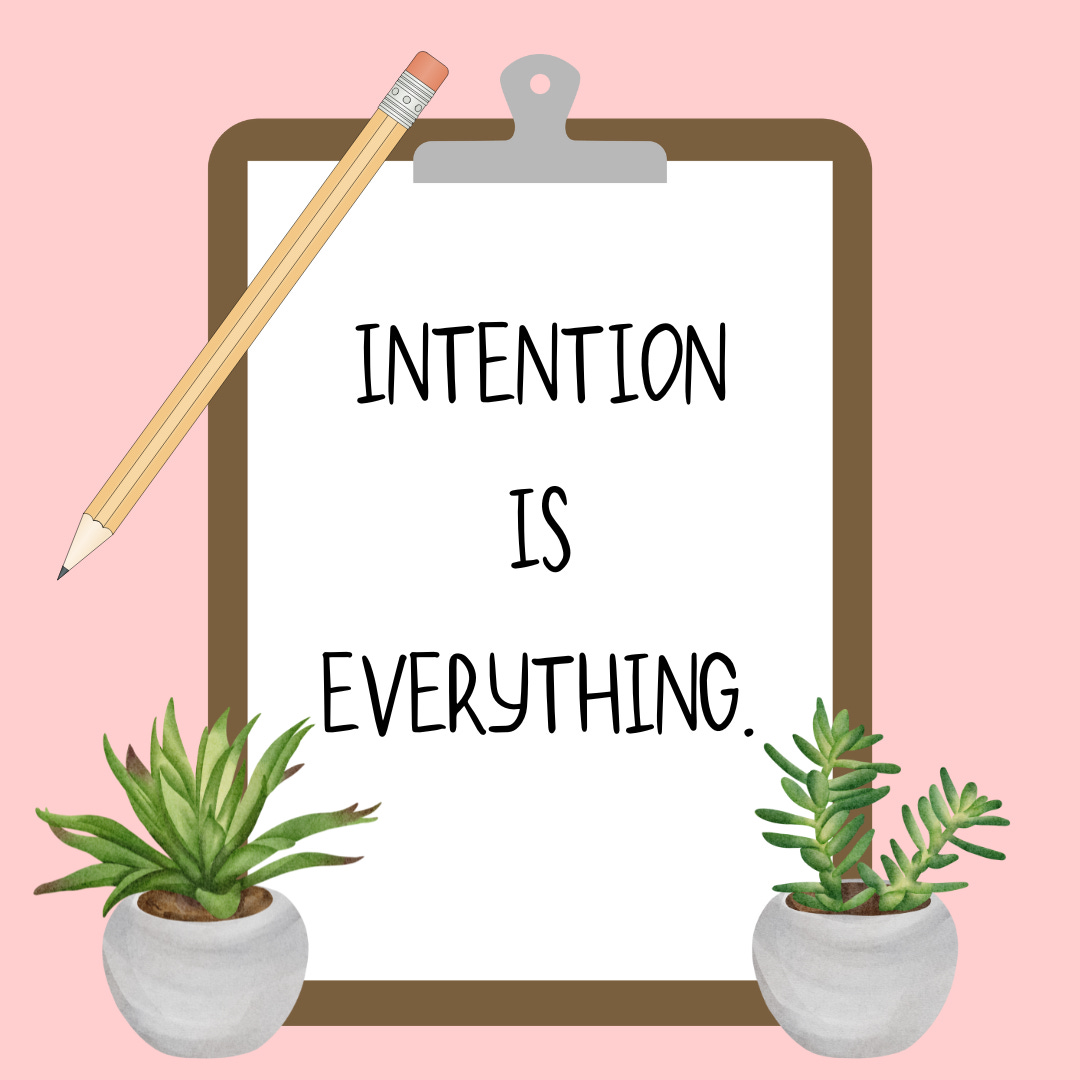
And I end with intention. Which is actually fitting, because I believe it’s the biggest lesson I’m learning about my writing and my career. What matters to me requires my intentional efforts. When I start a project, and I open that fresh composition notebook, the very first page is dedicated to intention setting. What do I want this book to be? For me, for the reader, for everyone who is going to be impacted by my work in one way or another? Setting the intention makes a book that is, at the moment I’m sitting down to begin, hypothetical feel solid and possible.
Intention is something I’ve been trying to infuse in every aspect of my writing career. It’s been difficult juggling two full time jobs, both writing and teaching, and I know that priorities need to shift, be reestablished, and intentionally considered.
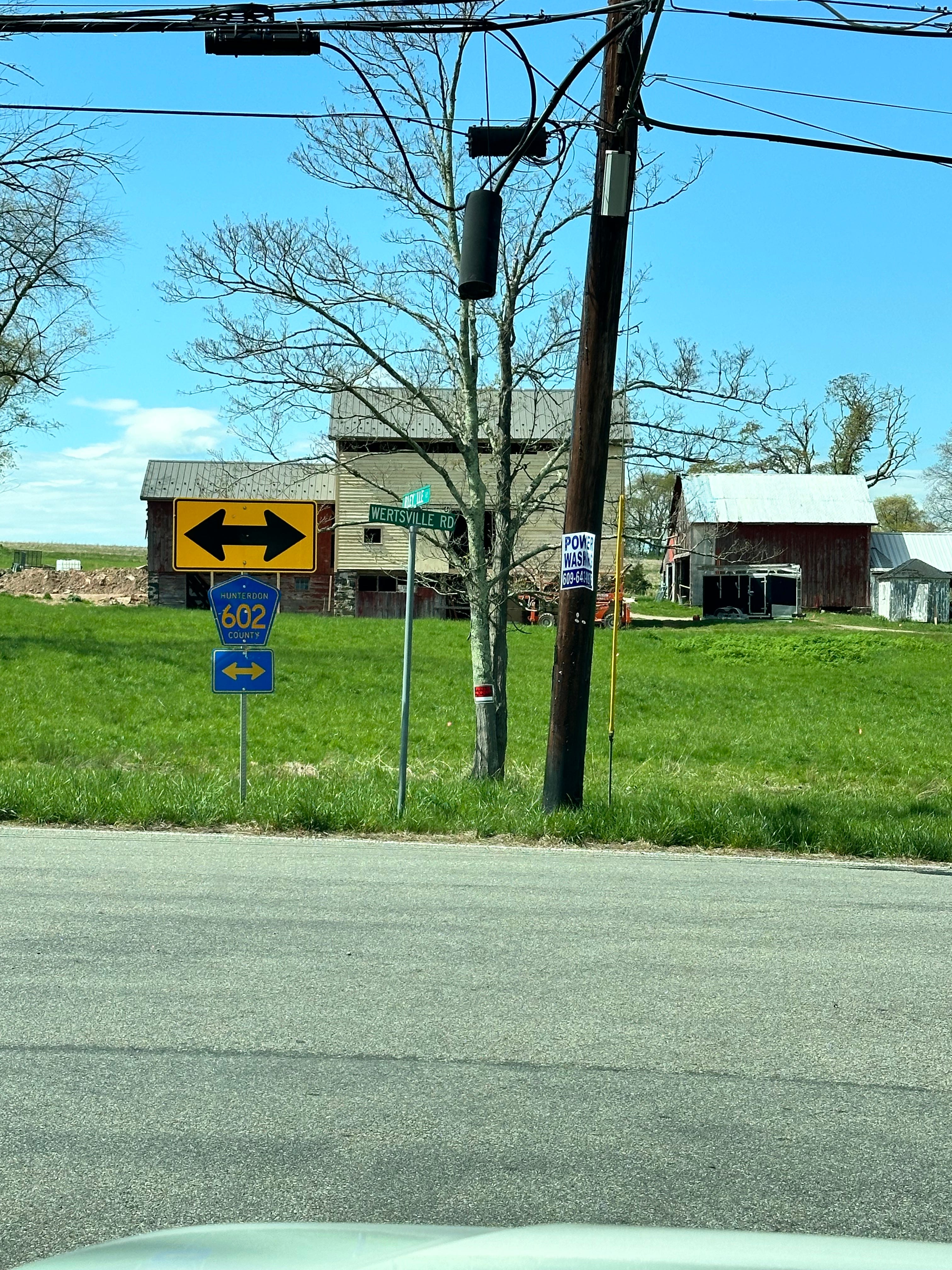
You’ve read this far, so I’ll reward you with my usual, what’s been bringing me joy lately: There’s a nearby farm that’s been somewhat abandoned for a while, then put up for sale. The other day, I saw that someone had purchased it (a beautiful old farmhouse, complete with a rundown barn, and so many acres of land). I was afraid it would be torn down and made into a housing development, but the new owners are working hard on bringing this barn back to life. My heart is so happy.
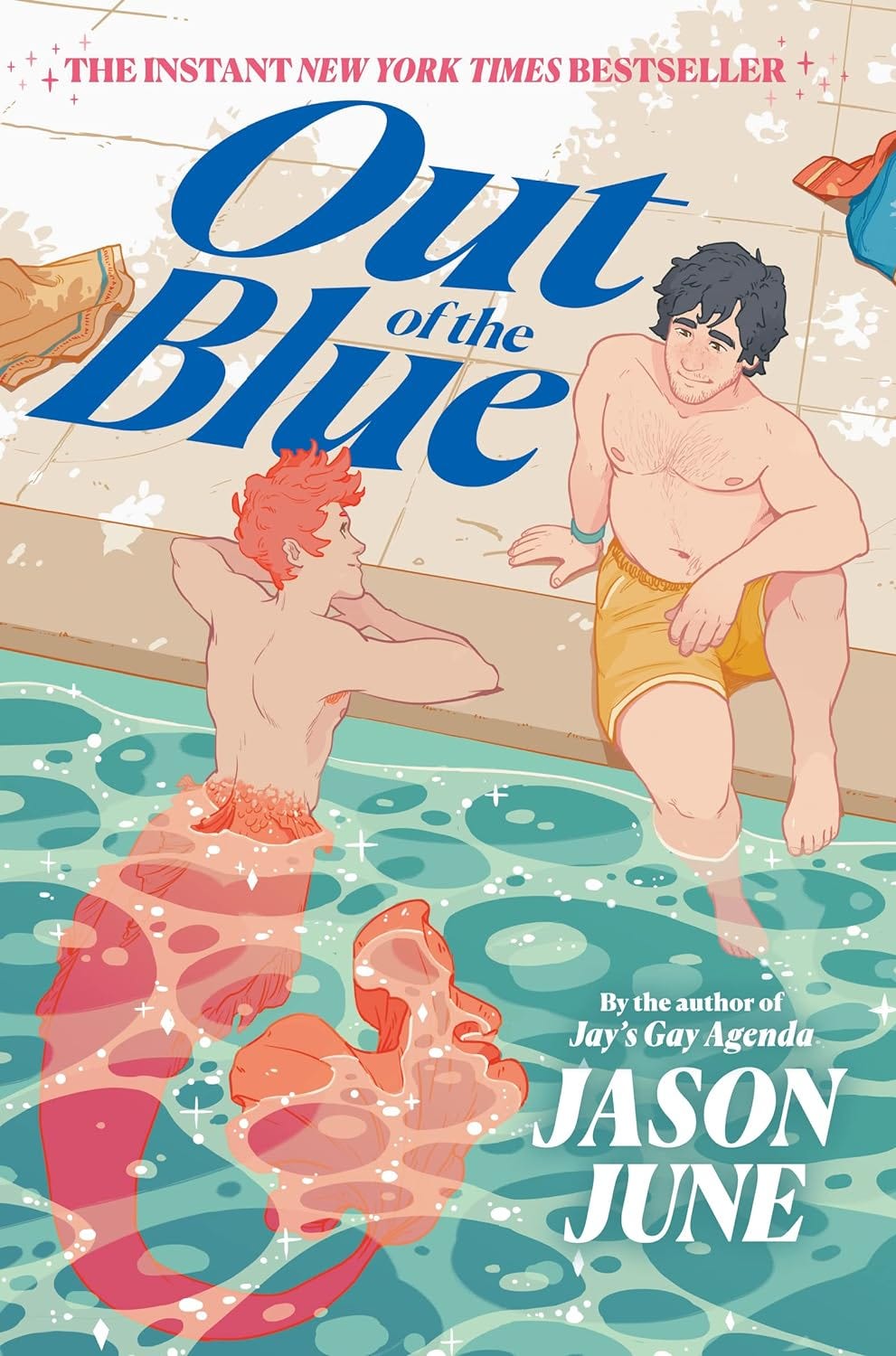
Current read: Out of the Blue by, Jason June
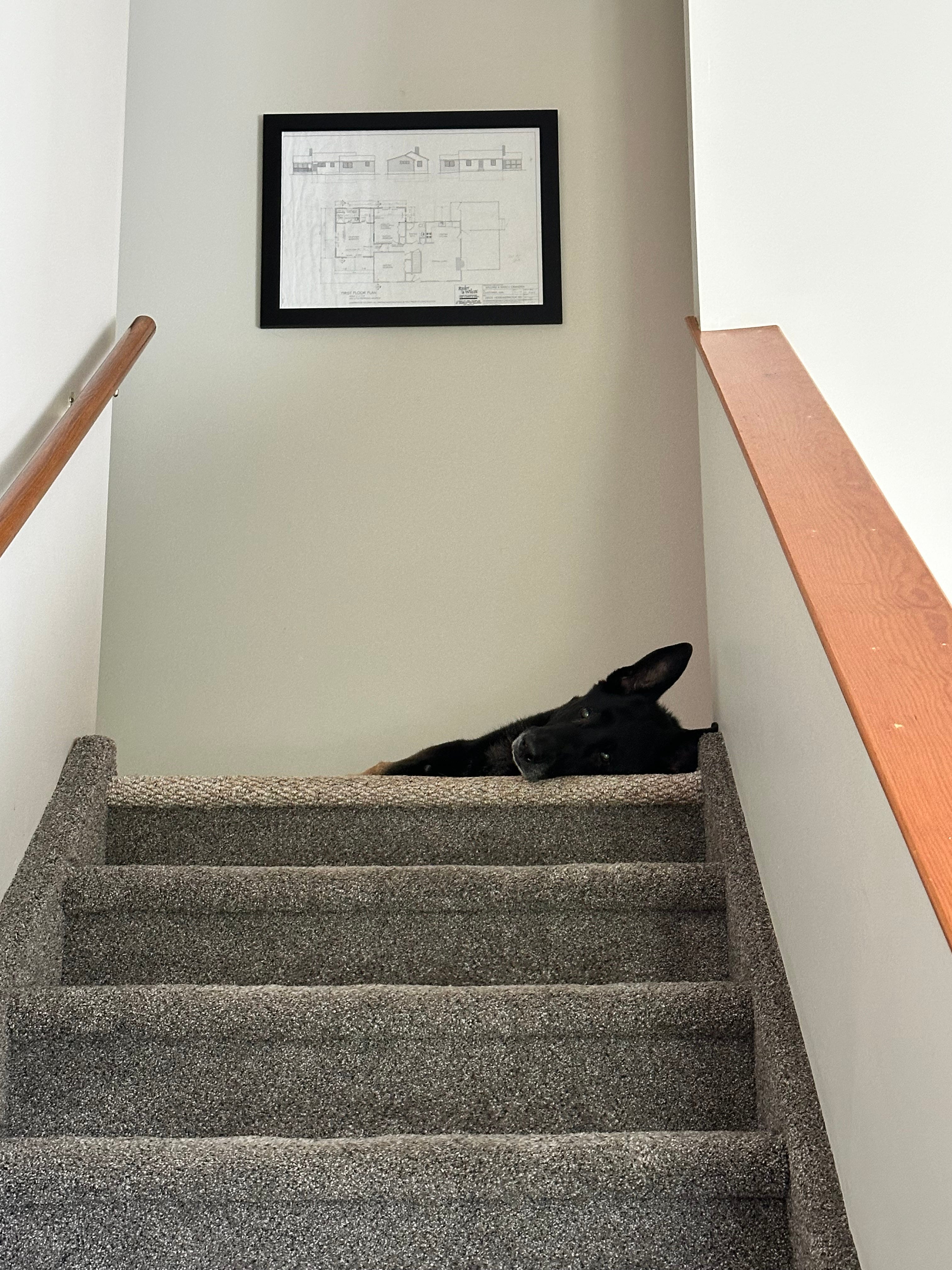
And finally, what Arrow’s been up to: Not going to lie, this has been a difficult month for my big guy. He turns eleven in June, and that’s getting up there for a German Shepherd. On a recent trip to the Cape, he struggled with the all tile and hardwood flooring at the other house; his pain was palpable. After a quick trip to the vet, he’s now getting the right medication to alleviate the stiffness in his hips. It’s so silly of me, because overall, Arrow’s in great shape. He’s still happy, and silly, and sweet, and smart, but this recent complication has put his mortality in the forefront for me. But it’s wrong to feel sad over losing a dog who’s still so very much here, and I keep trying to tell myself to love him in the moment. I’ve still got him. He’s still waiting for me at the top of the stairs.
Until next time, readers. xo Erica
We are so the same! I’m a hardcore plotter with very similar chapter by chapter outlining. And I’m honored that you’re reading OOTB!